Case studies
YuLife
Becoming Japan’s authoritative voice in employee wellbeing
Case studies
YuLife
Becoming Japan’s authoritative voice in employee wellbeing
YuLife
Becoming Japan’s authoritative voice in employee wellbeing
Case studies
Challenge
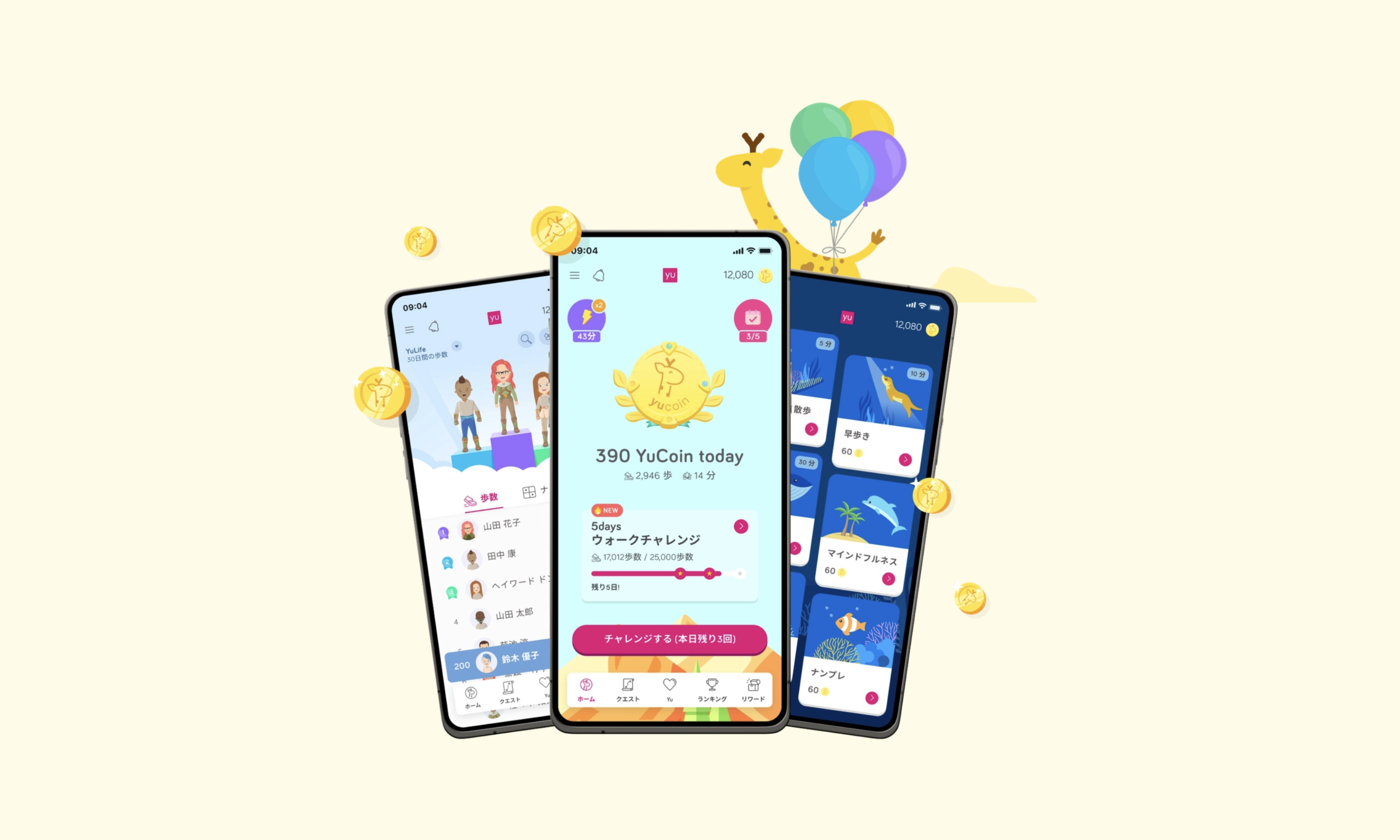
YuLife, an innovative wellness platform provider, have demonstrated strong product-market fit through their gamified approach to employee wellbeing, and aim to build their reputation as a science-based leader in corporate wellbeing in Japan.
While YuLife have a successful playbook for growth, they face distinct challenges in the Japanese market, such as competition from existing service providers, and a brand promise that has not yet been woven into the context of the local market.
In Japan's current employment landscape, companies—especially SMEs which comprise 99% of the corporate sector—are struggling with talent retention amid evolving workforce values. Investment in employee wellbeing through services like YuLife have shown proven results in improving talent retention and employee satisfaction.
With this in mind, to clearly differentiate their offering in an increasingly competitive market, Fabric were enlisted to support YuLife in positioning themselves as an international wellness company that reframes wellbeing - an imported concept - within the context of Japanese corporate work culture, and approaches the unique challenges faced by SMEs.
Challenge
YuLife, an innovative wellness platform provider, have demonstrated strong product-market fit through their gamified approach to employee wellbeing, and aim to build their reputation as a science-based leader in corporate wellbeing in Japan.
While YuLife have a successful playbook for growth, they face distinct challenges in the Japanese market, such as competition from existing service providers, and a brand promise that has not yet been woven into the context of the local market.
In Japan's current employment landscape, companies—especially SMEs which comprise 90% of the corporate sector—are struggling with talent retention amid evolving workforce values. Investment in employee wellbeing through services like YuLife have shown proven results in improving talent retention and employee satisfaction.
With this in mind, to clearly differentiate their offering in an increasingly competitive market, Fabric were enlisted to support YuLife in positioning themselves as an international wellness company that reframes wellbeing - an imported concept - within the context of Japanese corporate work culture, and approaches the unique challenges faced by SMEs.
Challenge
YuLife, an innovative wellness platform provider, have demonstrated strong product-market fit through their gamified approach to employee wellbeing, and aim to build their reputation as a science-based leader in corporate wellbeing in Japan.
While YuLife have a successful playbook for growth, they face distinct challenges in the Japanese market, such as competition from existing service providers, and a brand promise that has not yet been woven into the context of the local market.
In Japan's current employment landscape, companies—especially SMEs which comprise 99% of the corporate sector—are struggling with talent retention amid evolving workforce values. Investment in employee wellbeing through services like YuLife have shown proven results in improving talent retention and employee satisfaction.
With this in mind, to clearly differentiate their offering in an increasingly competitive market, Fabric were enlisted to support YuLife in positioning themselves as an international wellness company that reframes wellbeing - an imported concept - within the context of Japanese corporate work culture, and approaches the unique challenges faced by SMEs.

Approach
We developed an authoritative thought leadership report by combining expert insights with Fabric's extensive knowledge of wellbeing and sustainability in Japan.
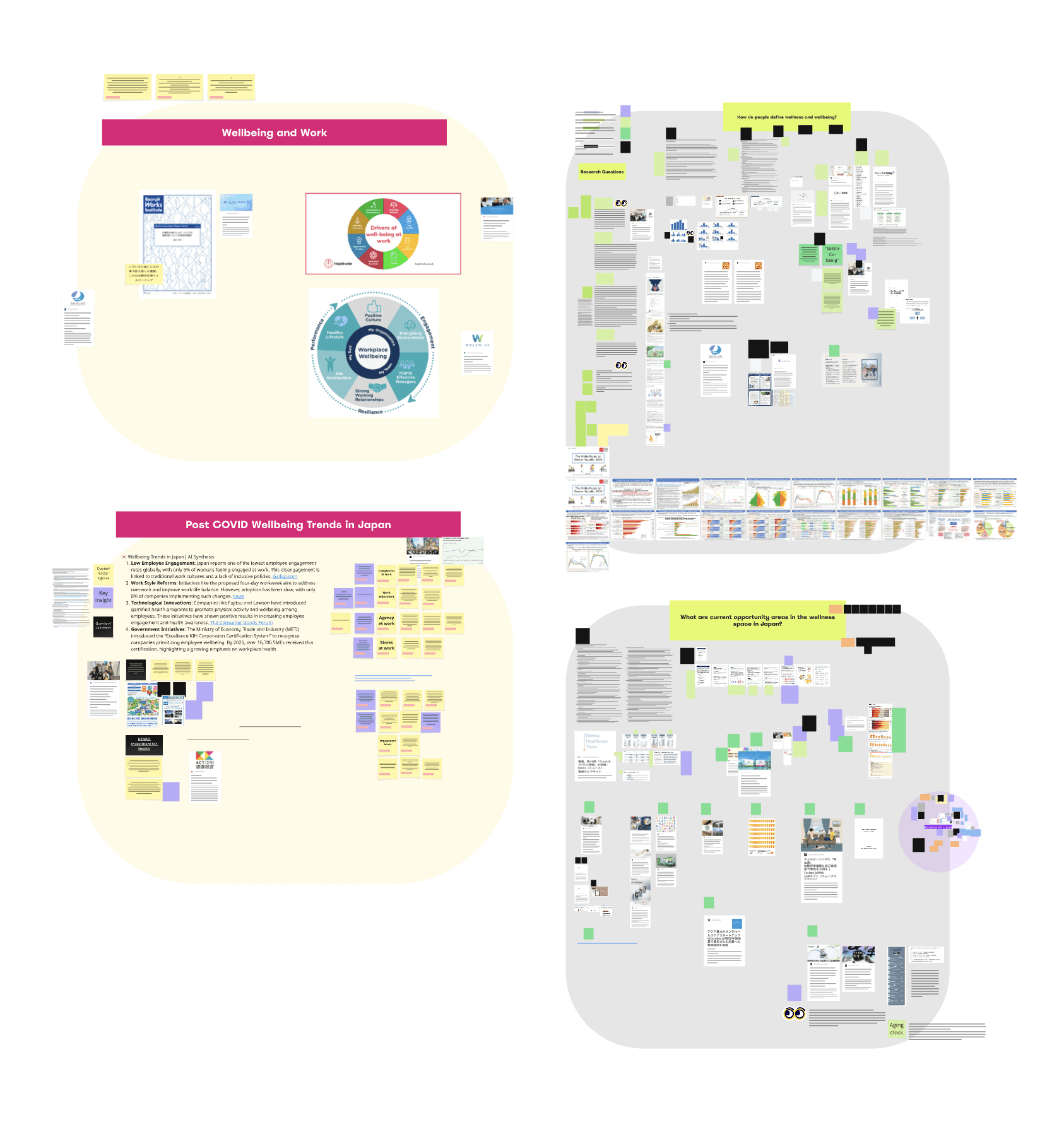
The first phase involved defining YuLife's core values in the Japanese market through strategic stakeholder interviews and analysis of existing client success stories. We conducted in-depth interviews with three distinguished experts (Takashi Maeno, Shimada Yuka, and Hida Akihiro), complemented by comprehensive secondary research on national trends and wellbeing perceptions.
Approach
We developed an authoritative thought leadership report by combining expert insights with Fabric's extensive knowledge of wellbeing and sustainability in Japan.
The first phase involved defining YuLife's core values in the Japanese market through strategic stakeholder interviews and analysis of existing client success stories. We conducted in-depth interviews with three distinguished experts (Takashi Maeno, Shimada Yuka, and Hida Akihiro), complemented by comprehensive secondary research on national trends and wellbeing perceptions.
Approach
We developed an authoritative thought leadership report by combining expert insights with Fabric's extensive knowledge of wellbeing and sustainability in Japan.
The first phase involved defining YuLife's core values in the Japanese market through strategic stakeholder interviews and analysis of existing client success stories. We conducted in-depth interviews with three distinguished experts (Takashi Maeno, Shimada Yuka, and Hida Akihiro), complemented by comprehensive secondary research on national trends and wellbeing perceptions.
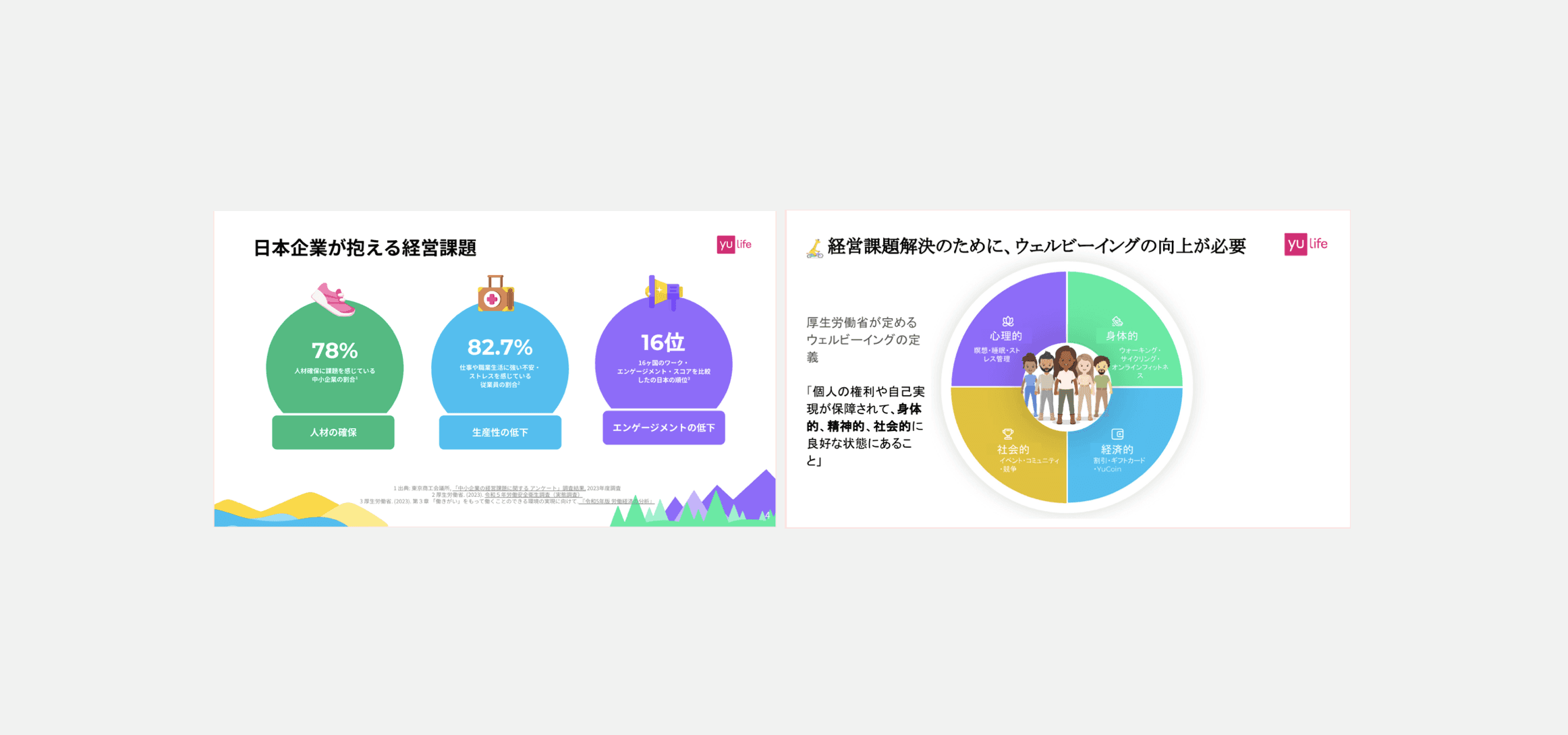
Building on this foundation, we identified key intersections between YuLife's core values and Japan's workplace wellbeing challenges, developing practical, actionable approaches for SMEs to implement effective wellbeing management strategies.
To ensure maximum relevance for SME decision-makers, we carefully examined the cultural nuances of wellbeing in the Japanese context, demonstrating the tangible business impact of incorporating wellbeing initiatives into management practices.
Building on this foundation, we identified key intersections between YuLife's core values and Japan's workplace wellbeing challenges, developing practical, actionable approaches for SMEs to implement effective wellbeing management strategies.
To ensure maximum relevance for SME decision-makers, we carefully examined the cultural nuances of wellbeing in the Japanese context, demonstrating the tangible business impact of incorporating wellbeing initiatives into management practices.
Building on this foundation, we identified key intersections between YuLife's core values and Japan's workplace wellbeing challenges, developing practical, actionable approaches for SMEs to implement effective wellbeing management strategies.
To ensure maximum relevance for SME decision-makers, we carefully examined the cultural nuances of wellbeing in the Japanese context, demonstrating the tangible business impact of incorporating wellbeing initiatives into management practices.

Outcomes
With this first-of-its-kind report in hand, YuLife are building a stronger reputation as an international corporate wellbeing leader with deep expertise to leverage in addressing challenges facing SMEs in Japan.
Our research yielded key insights and trends for SME leaders seeking to integrate wellbeing into their management practices. Wellbeing management provides an effective solution to SMEs' critical talent shortage challenges by emphasising human capital as a vital business asset. Through our expert interviews, we uncovered a uniquely Japanese interpretation of wellbeing centered on vitality ("活力"), where organisations can enhance their collective strength by maximising individual employee engagement and job satisfaction. This approach requires careful cultivation of organisational communication and connections as social capital.
Outcomes
With this first-of-its-kind report in hand, YuLife are building a stronger reputation as an international corporate wellbeing leader with deep expertise to leverage in addressing challenges facing SMEs in Japan.
Our research yielded key insights and trends for SME leaders seeking to integrate wellbeing into their management practices. Wellbeing management provides an effective solution to SMEs' critical talent shortage challenges by emphasising human capital as a vital business asset. Through our expert interviews, we uncovered a uniquely Japanese interpretation of wellbeing centered on vitality ("活力"), where organisations can enhance their collective strength by maximising individual employee engagement and job satisfaction. This approach requires careful cultivation of organisational communication and connections as social capital.
Outcomes
With this first-of-its-kind report in hand, YuLife are building a stronger reputation as an international corporate wellbeing leader with deep expertise to leverage in addressing challenges facing SMEs in Japan.
Our research yielded key insights and trends for SME leaders seeking to integrate wellbeing into their management practices. Wellbeing management provides an effective solution to SMEs' critical talent shortage challenges by emphasising human capital as a vital business asset. Through our expert interviews, we uncovered a uniquely Japanese interpretation of wellbeing centered on vitality ("活力"), where organisations can enhance their collective strength by maximising individual employee engagement and job satisfaction. This approach requires careful cultivation of organisational communication and connections as social capital.
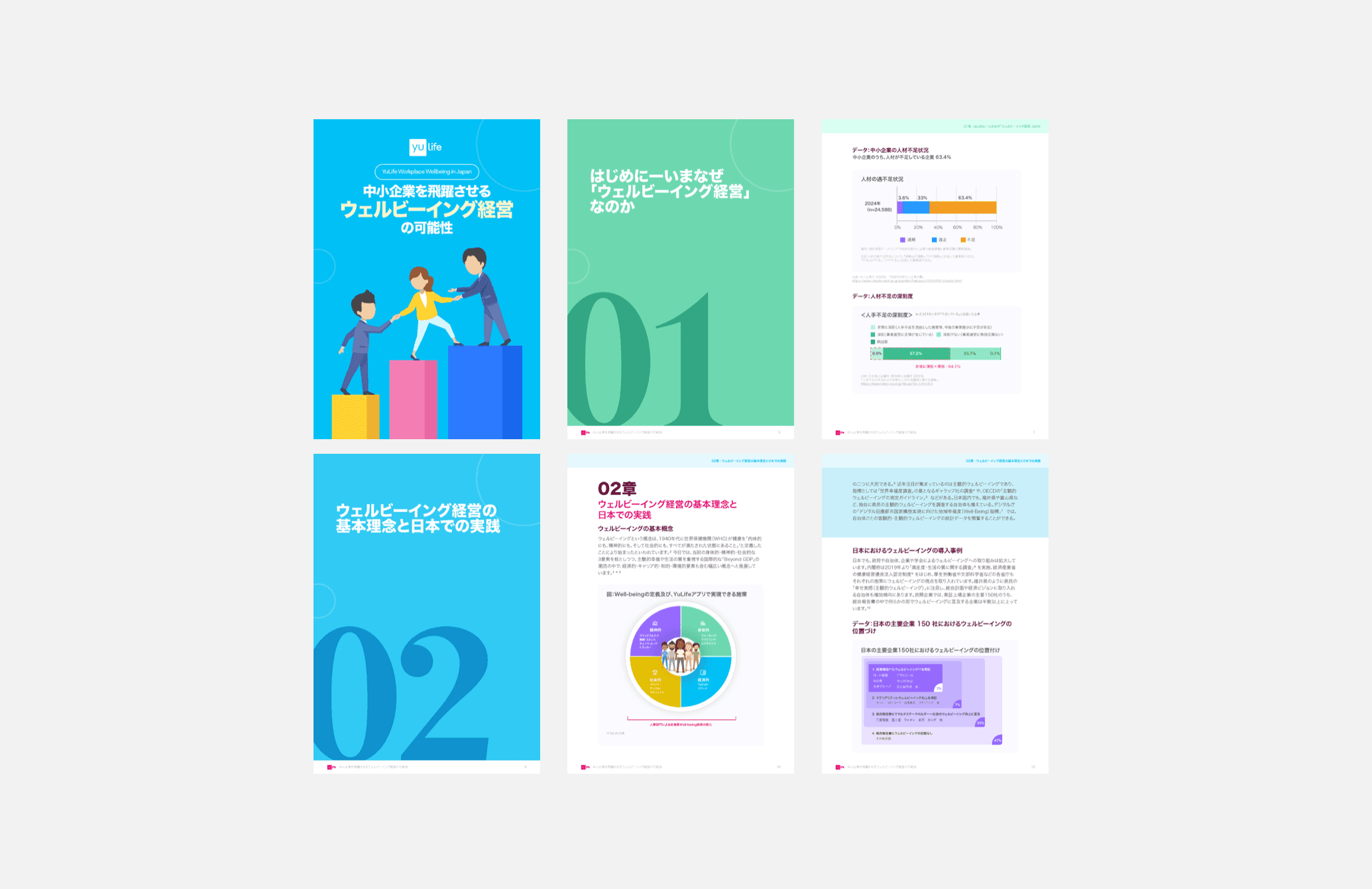
We distilled these key insights into clear, actionable steps for C-Suite members of SMEs to implement immediately and begin shifting their organisational culture. This comprehensive report is now available online for public distribution, and is being leveraged in YuLife’s promotional activities in the corporate wellbeing space. YuLife are now more able to engage with SMEs and onboard new users with a shared understanding of the importance of employee wellbeing, leading to broader shifts in corporate wellbeing in Japan.
We distilled these key insights into clear, actionable steps for C-Suite members of SMEs to implement immediately and begin shifting their organisational culture. This comprehensive report is now available online for public distribution, and is being leveraged in YuLife’s promotional activities in the corporate wellbeing space. YuLife are now more able to engage with SMEs and onboard new users with a shared understanding of the importance of employee wellbeing, leading to broader shifts in corporate wellbeing in Japan.
Contributors
Fabric
James Hollow
Business Director
Ai Yamanaka
Senior Strategic Designer
Hasumi Nemani
Program Manager &
Sustainability Strategist
Ryoko Baba
Senior Content Strategist
YuLife
Ariko Mikoshiba
Branding & Content Marketing Manager
Ray Nishijima
BtoB Growth Marketing Lead
Shay Khosrowshahi
Country Director, Japan
Other
Takashi Maeno
Dean, Faculty of Wellbeing, Musashino University
Akihiro Hida
Director of Happiness and Sense of Well-being, Future creation department, Fukui Prefecture
Yuka Shimada
Co-founder/ representative director, Yeey Corporation
Related case studies



Fabric is collaborating with Andersen Consulting
Nakame Gallery Street J4
2-45-12 Kami-meguro
Meguro-ku Tokyo 153-0051
Japan




Fabric is collaborating with Andersen Consulting
Nakame Gallery Street J4
2-45-12 Kami-meguro
Meguro-ku Tokyo 153-0051
Japan
Copyright Ⓒ Fabric 2026
Fabric is collaborating with
Andersen Consulting
Nakame Gallery Street J4
2-45-12 Kami-meguro
Meguro-ku Tokyo 153-0051
Japan